
DHI vs FUE
DHI and FUE hair transplant options are available at Alloroots, led by Dr. Alok Kumar Sahoo. Indian patients can choose from male hair transplant and female hair transplant, with doctor-led evaluation, privacy-focused care, and treatment plans tailored to scalp condition and restoration goals.

Key differences in technique
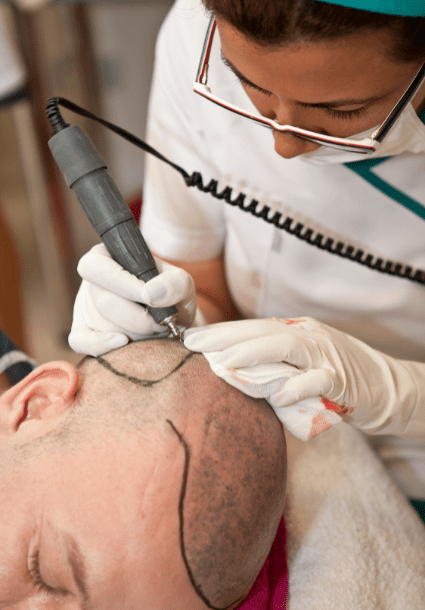
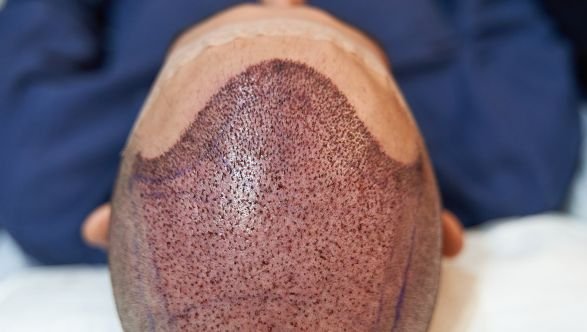
FUE involves extracting follicular units individually, creating recipient sites, then placing grafts. DHI uses an implanter pen to implant grafts immediately after extraction, reducing handling time and allowing precise placement.
- FUE: suited for large graft numbers, with separate site creation and placement.
- DHI: simultaneous extraction and placement, suited for targeted density in smaller areas.
- Long Hair FUE: keeps donor hair longer for a non-shave approach, offered at Alloroots.
Both require skilled execution. Choice depends on area size, hairline detail, and budget. Recovery and growth timelines are similar, with differences mainly in shaving needs and graft handling.
Procedure and recovery overview
In FUE, donor hair is trimmed, follicles are extracted, channels are made, and grafts are placed. DHI can use partial shaving and direct implantation with the pen device. Shorter handling in DHI may reduce swelling for some, though total procedure time may be longer.
Most patients resume light activities within days. New growth often starts around three months and matures over a year. At Alloroots, before-and-after images are shared only with patient consent.
Choosing the method for your needs
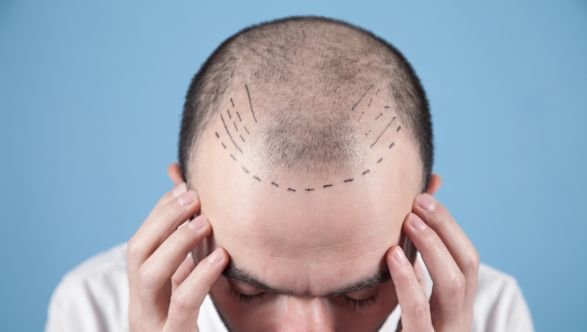
DHI is often chosen for refined hairline design or minimal shaving. FUE works well for wider coverage and cost-sensitive cases. Services like hairline design & restoration can be applied to either method after clinical review.
- DHI: best for targeted density and detailed placement.
- FUE: efficient for extensive coverage.
- Scar Hair Restoration: uses FUE principles for scarring alopecia.
A consultation can confirm suitability. Patients should discuss donor hair availability, lifestyle, and recovery expectations with their doctor.
About Alloroots
Alloroots is a doctor-led hair restoration clinic in India specialising in surgical hair transplantation and regenerative trichology. Led by Dr. Alok Kumar Sahoo (MD Dermatology, AIIMS New Delhi), services include personalised diagnosis, natural hairline design, advanced FUE-based transplants, and non-surgical treatments such as PRP, i-PRF, GFC, SMP, LLLT, Dermapen, Exosome Therapy, SVF, Autologous Cellular Micrografts, and ACell+PRP. Consultations are available in-clinic and online across India. Visit Alloroots for privacy-first, evidence-led care.
Ready to discuss your hair restoration plan with a specialist?
Consult UsFAQs
Frequently Asked Questions
1
Is DHI more expensive than FUE?
DHI usually costs more due to specialised equipment and longer procedure time, though prices vary by clinic and case complexity.
2
Does DHI require shaving the head?
DHI can be performed with partial shaving, unlike FUE which typically needs donor area trimming.
3
Which method heals faster, DHI or FUE?
Both have similar healing times, but some patients report less swelling with DHI due to direct implantation.
4
Can FUE cover larger bald areas?
Yes, FUE is often chosen for extensive coverage as it allows higher graft numbers in one session.
5
Will my results look natural with either method?
Natural results depend on surgeon skill, hairline planning, and individual hair characteristics, not just the technique.
6
How soon can I return to work after a hair transplant?
Most patients resume non-strenuous work within a few days, but full recovery and growth take months.
Speak with our hair restoration specialists about your treatment options.
Book a Consultation View PricingPopular Searches
FUE vs Fut Comparison
DHI vs FUE Hair Transplant Costs in India
FUE Extraction vs Implantation in India
FUE vs Fut Hair Transplant India
FUE vs FUT Hair Transplant in India
FUE Cost in India
DHI vs Choi Implanter Pen in India
Hair Transplant Techniques in India: FUE, DHI, and More
FUE Procedure Cost
Dhi Hair Transplantation
FUE Transplants
FUE Treatment Cost
Cost of FUE per Graft
No Shave FUE Procedure
Long Hair FUE Technique India
DHI Hair Transplant in India