
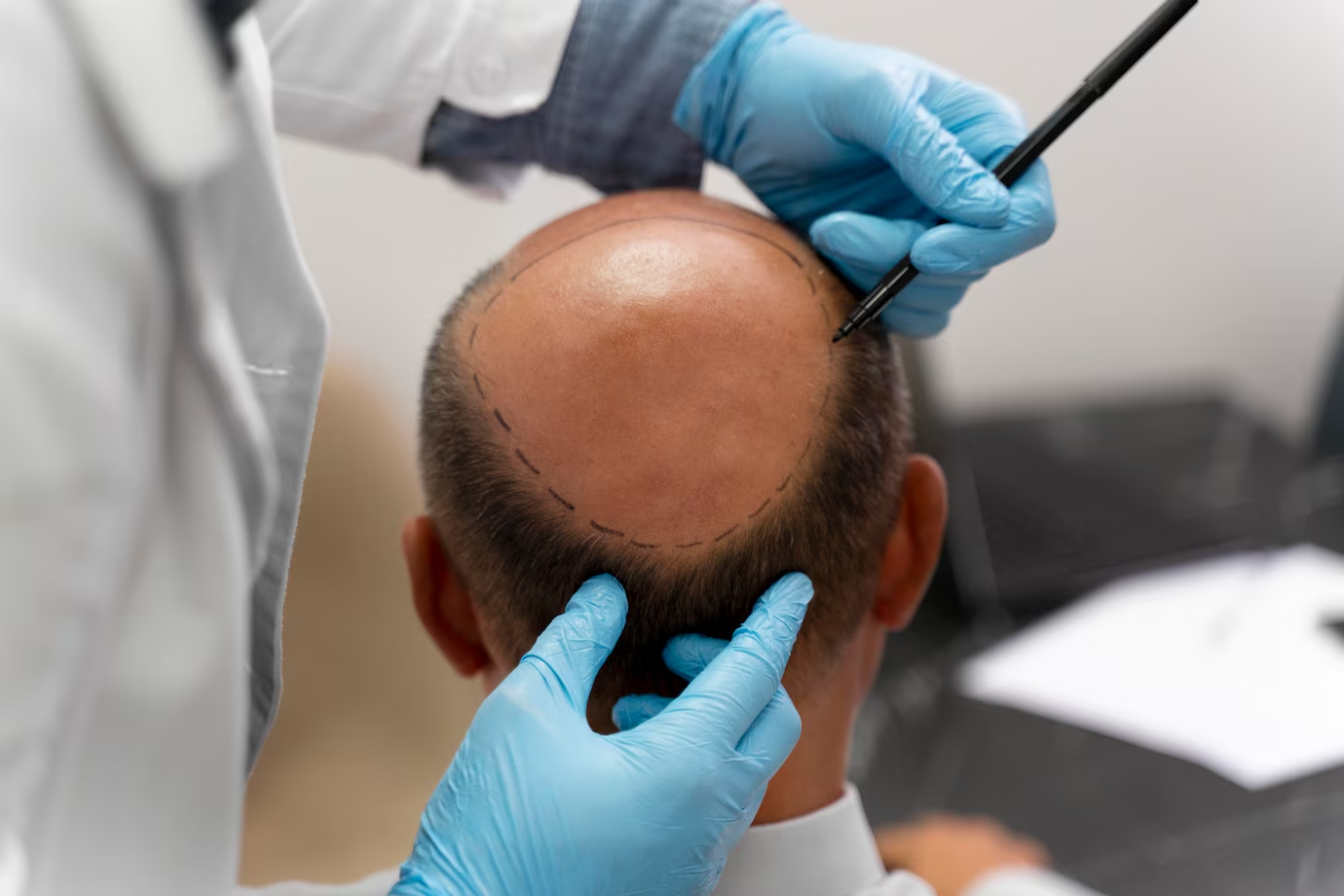
Delhi has silently emerged as the single largest magnet for Hair restoration in India. Patients come from across the country and from abroad to consult, compare, and undergo procedures here. In this article, we explain why Delhi has earned a reputation similar to Turkey’s global hair transplant hub, outline the market forces and numbers that support that claim, and describe what patients should consider when choosing a clinic.
A comparative snapshot: why the Turkey comparison fits
When people call Delhi the “Turkey of India” for hair transplants, they mean three things: First, Delhi has the biggest concentration of clinics and surgeons offering hair restoration anywhere in India. Second, it attracts a steady, high flow of patients, including medical travellers. Third, procedures and associated services are widely available and competitively priced compared with many Western markets.
There are several hundreds of clinics and centres offering hair restoration services across the National Capital Region. Business listings report several hundred dedicated hair transplant clinics just within the city and its adjoining areas. This density mirrors other global hubs where patient choice and price competition spur growth. Research into the listings and directories shows more than 600 clinics in Delhi alone, underlining the sheer scale of supply in the city.
It is a rapidly expanding industry at a national level. The India hair transplant market reached about USD 252 million in 2024, and, according to independent market analysts, the growth is expected to be robust, with a projection for more than USD 1.7 billion by 2033, sustained by raising awareness of the procedures, advances in technique, and medical tourism. Indeed, those growth figures explain why so many clinics set up in major urban centres like Delhi.
Globally, too, the hair transplant market is growing rapidly and reinforces the sector’s momentum. International market reports project strong compound annual growth rates, reflecting technology innovations, broader acceptance of aesthetic procedures, and the economics of cross-border care. Those trends make it logical for a major capital city such as Delhi to become a national hub.
Why patients choose Delhi
Several practical reasons explain why patients prefer Delhi.
Choice and specialisation
Delhi has an unusually broad range of clinics and surgeons. Patients can compare expert practices specialising in FUE, DHI, robotic approaches, and combined methods. The depth of specialisation allows patients to match case complexity to surgeon experience and technique.
Cost competitiveness
Costs in Delhi are generally lower than in Western Europe and North America and comparable with other Indian metros. Pricing per graft varies widely, but an average range for FUE in major Delhi clinics can begin at the lower end of a few tens of thousands of rupees depending on graft count and technique. Per-graft pricing models, bundled procedure fees, and promotional packages are common, which adds to the market’s appeal for budget- and value-conscious patients. Data from clinic cost guides and aggregator sites show ranges of per-graft and whole-procedure estimates for Delhi that help patients plan.
Accessibility and infrastructure
Delhi’s transport links and urban infrastructure make it an easy city to travel to and stay in for a short course of treatment and follow-up. Its hotels, hospitality services, and international airport make the city practical for both domestic and international patients.
Surgeon experience and training
Many experienced dermatologists and hair restoration surgeons practise in Delhi. Clinics often advertise surgeon credentials, case numbers and before-and-after photos, allowing patients to directly gauge clinical experience themselves. Clinics in Delhi may also attract a larger share of referrals of challenging cases due to reputation and capability.
Post-operative services and ancillary care
Most clinics in Delhi offer an inclusive post-operative care package that involves PRP sessions, follow-up consultations, and medicines. Some clinics also offer bundled transport and accommodation services for out-of-town patients.
Patient flow and medical tourism
Medical tourism for cosmetic and restorative procedures is a worldwide phenomenon. India’s cost structure and high clinical capability make it a very attractive option. While India is not yet in the same absolute dominant position as Turkey in terms of international hair transplant tourism, it is rapidly becoming the regional destination of choice. The market statistics and clinic listings below reflect both domestic demand and an increasingly international clientele visiting large metros such as Delhi. In short, the reasons Delhi sees so many patients each year are affordability, skilled practitioners, and accessible services.
Clinic types and techniques commonly available in Delhi
The following are some of the most common clinic types and techniques that are available in Delhi.
- In Delhi, patients have a range of providers to choose from, broadly falling into the following three categories.
- Specialist hair transplant centres focus mainly on hair restoration and related procedures.
- Multi-disciplinary cosmetic clinics or dermatology centres offering hair transplantation among their other aesthetic services.
- These include hospital departments and plastic surgery units that offer hair restoration among the broad range of surgical services.
Available techniques include standard FUE, sapphire FUE, DHI, FUT in selected centres and, increasingly, robotic assistance in graft harvesting and placement. Most clinics will also frequently combine transplantation with a range of adjuvant therapies such as platelet-rich plasma therapy, mesotherapy, and topical medical regimes.
Outcome quality and how to evaluate clinics
Success in hair transplantation involves a combination of technical skill and realistic expectations. The main indicators of quality outcome are as follows:
- Surgeon Qualifications and Years of Experience
- Documented case volumes and graft numbers performed annually
- Before-and-after galleries demonstrating consistent, natural-appearing results
- Patient reviews and verified testimonials
- Clear preoperative assessment and personalised treatment planning
- Postoperative care protocol and visible results at standard follow-up intervals
They should also be cautious of clinics that depend purely on dramatic marketing images without clinical substantiation.
Risks and regulatory considerations
As with any surgical procedure, there are risks. The most common short-term issues are transient swelling, soreness at donor and recipient sites, and an initial shedding phase, which is a normal phase in the timeline of regrowth. Poorly performed procedures can result in scarring, unnatural hairlines, or uneven density.
Regulation of cosmetic clinics in India varies by state and by the nature of the facility. Patients should check if the clinic is registered, whether the surgeons are qualified, and that the procedure takes place in an accredited surgical environment. Asking about asepsis protocols, staff training, and the clinic’s complication management pathway is sensible.
Practical checklist for prospective patients
Consider the following checklist if you are considering a Hair transplant in Delhi:
- Check the surgeon’s credentials and request a consult.
- Ask for case volumes and at least a handful of recent, unedited before-and-after photos for cases like yours.
- Request a quote in writing with a draft estimate and itemised inclusions.
- Clarify the postoperative follow-up frequency and whom to contact in an emergency.
- Check patient reviews on independent platforms and verify if the clinic publishes clinical data.
- Confirm travel and accommodation logistics as necessary.
A word about reputation management and the market
With so many clinics in Delhi, reputation can make all the difference. Clinics offering transparent pricing, documented results, and comprehensive aftercare fare better in garnering reviews and referrals, ensuring a good flow of patients. This leads to self-reinforcing clusters of high-quality providers in certain localities within the city.
About Alloroots
We are Alloroots Hair Restoration, a network of hair restoration centres with clinics across several Indian cities, including Delhi and Bhubaneswar. Our practice is founded upon surgical precision, evidence-informed technique selection, and patient-centred care. We focus on advanced FUE techniques and strive to maintain high standards for asepsis, graft handling, and natural hairline design. When a patient chooses Alloroots, they benefit from a detailed preoperative assessment, transparent counselling about realistic outcomes, and an aftercare plan to support optimal graft survival and natural regrowth. Our team includes experienced dermatologists and hair restoration surgeons, and we emphasise clear communication and measurable follow-up so patients can track progress confidently.
Final considerations
Delhi thus plays an important part in India’s hair restoration landscape. The city’s concentration of clinics, wide availability of techniques, competitive pricing, and reputation for skilled practitioners make it the natural choice for many patients. That, however, does not mean that quality is uniform across the market. Careful evaluation, verified credentials, and a detailed, written treatment plan are essential in securing a positive outcome. Patients should approach Delhi as a place of plenty and optionality, not as a shortcut. Utilise available resources, demand transparent data, and make a decision that is based upon clinical evidence rather than marketing alone. Carefully chosen, a hair transplant in Delhi could offer meaningful, long-term results at a value and convenience that few other cities in the region can match.

Dr. Alok is a renowned Pan India Hair Restoration Surgeon with an MD in Dermatology & Venereology from AIIMS, New Delhi. With over 3000 successful hair transplants to his name, he has transformed the lives of thousands across the country, providing expert hair care with a focus on integrity, precision, and personalized solutions. His vast experience and commitment to excellence make him a trusted leader in the field of hair restoration.